

Buying a Home in Toronto With a Local Real Estate Broker
Toronto’s housing market moves differently street by street. A condo in Liberty Village competes on different terms than a semi in the Beaches, and a bungalow in Etobicoke sells at a different pace than a townhouse in North York. Farah Khan, a licensed real estate broker with Pontis Realty Inc., Brokerage, works with buyers across Toronto and the GTA to find the right property, understand what it’s actually worth, and put together an offer that holds up in negotiation.
Whether this is a first home, a move up, or a purchase after relocating to the city, the process below explains what buying a home in Toronto actually involves and where a broker’s guidance makes the biggest difference.
Why Buying a Home in Toronto Requires Local Expertise
Toronto isn’t one market. Pricing, competition and pace of sale vary by neighbourhood, property type and even the specific street. A home that looks well-priced on paper can still turn into a bidding war, or sit unsold for weeks, depending on comparable sales nearby and current buyer demand in that pocket of the city.
A buyer working without local guidance is often pricing off national averages or outdated listings. Farah Khan tracks recent comparable sales, current inventory and neighbourhood-level demand across the areas she serves, so buyers can tell the difference between a fair asking price and one built to spark a bidding war.
Step-by-Step Process of Buying a Home in Toronto
Determine Your Budget
Before touring a single property, it helps to know what's realistic. This means looking beyond the purchase price to include the down payment, closing costs, and ongoing carrying costs like property tax, utilities and, for condos, maintenance fees.
Get Mortgage Pre-Approval
A mortgage pre-approval from a lender or mortgage broker confirms how much financing is available and locks in an interest rate for a set period. In a market where competitive offers are common, sellers and listing agents often expect a pre-approval before taking an offer seriously.
Choose the Right Neighbourhood
Commute, schools, transit access, lifestyle and long-term resale potential all factor in here. Farah Khan works through these priorities with each buyer and narrows the search to neighbourhoods that genuinely fit, rather than sending a generic list of every listing on the market.
Search Available Homes
With criteria set, the search moves to active MLS listings and, where relevant, upcoming or off-market opportunities. Buyers get curated listings that match their budget and priorities instead of having to sift through hundreds of results themselves.
Schedule Property Viewings
Seeing a property in person surfaces details photos miss, from street noise to layout flow to signs of deferred maintenance. Farah Khan attends viewings with buyers and flags anything worth a closer look before an offer is written.
Make an Offer
This is where local negotiation experience matters most. An offer needs the right price, the right conditions (financing, inspection, status certificate review for condos), and the right timeline to be competitive without leaving a buyer exposed. In multiple-offer situations, how an offer is structured can matter as much as the number attached to it.
Complete Inspection and Closing
Once an offer is accepted, a home inspection (where conditions allow) and a real estate lawyer's review of the agreement come next. Closing involves land transfer tax, legal fees and final mortgage arrangements. Farah Khan coordinates with the buyer's lawyer and lender to keep this stage on track.

Why Work With Farah Khan When Buying a Home in Toronto?
Local market knowledge. Day-to-day work across Toronto neighbourhoods means current insight into pricing, inventory and competition, not just historical averages.
Direct communication. Buyers work directly with Farah Khan rather than being passed between assistants or a large team.
Negotiation support. From structuring offer conditions to handling multiple-offer situations, negotiation strategy is built around each buyer’s specific budget and priorities.
Buyer representation. As a licensed broker with Pontis Realty Inc., Farah Khan represents the buyer’s interests through the search, offer and closing process.
Popular Toronto Areas for Home Buyers
Downtown Toronto
condos and walkable access to work, transit and amenities
Midtown Toronto
a mix of condos and family homes near subway lines
North York
larger lot sizes, family-oriented neighbourhoods, strong school catchments
Scarborough
relatively more affordable detached and semi-detached housing
Etobicoke
a range of price points from condos to detached homes, with lake and park access
East York
established residential streets close to the Danforth and downtown core
The Beaches
boardwalk lifestyle with detached and semi-detached homes
Leslieville
walkable, restaurant-dense east-end neighbourhood popular with younger buyers
High Park
green space access paired with a mix of housing types
The Annex
older homes near the University of Toronto with strong character housing stock
Rosedale
established, higher-end detached homes
Liberty Village
condo-focused, popular with buyers wanting a downtown-adjacent lifestyle
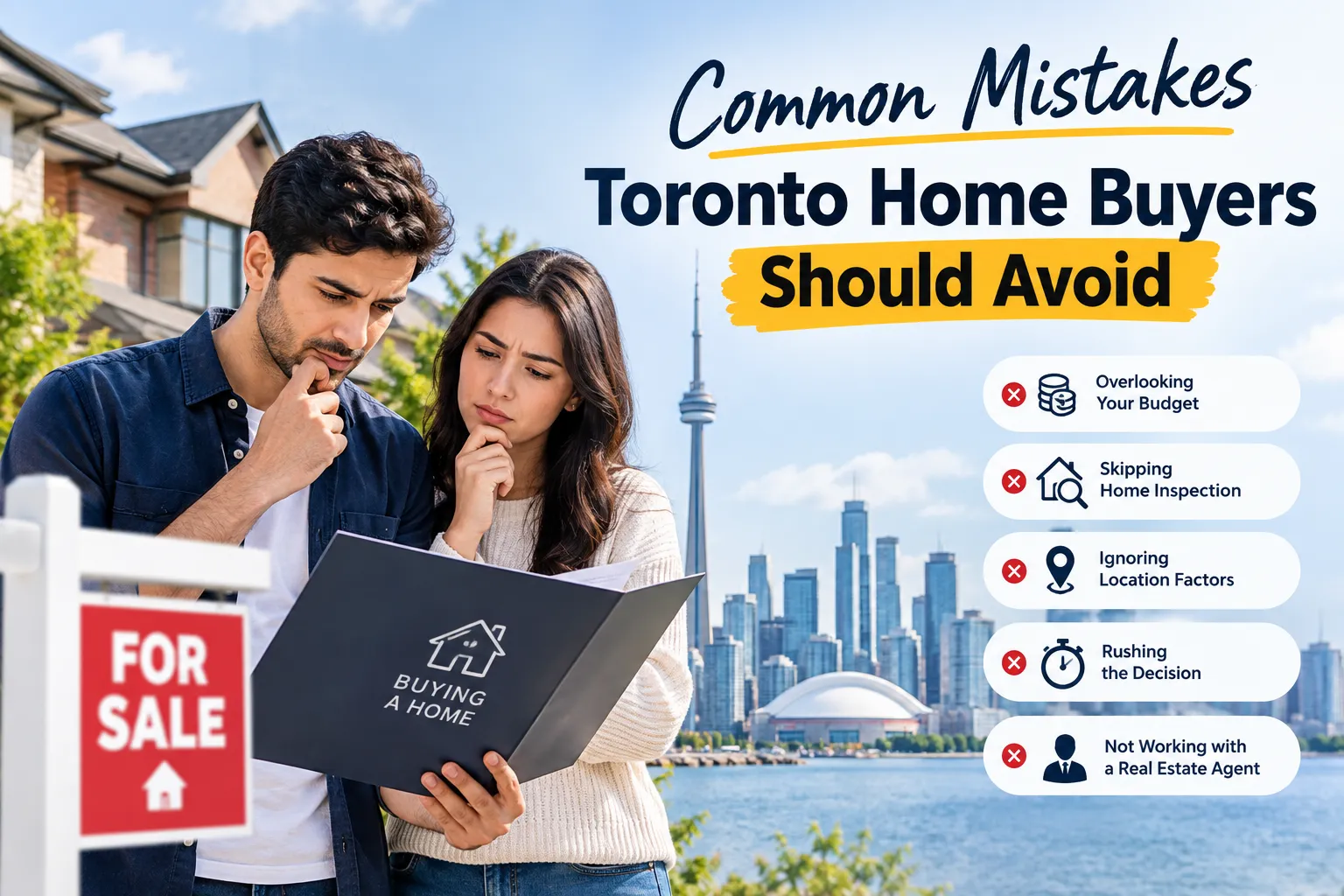
Common Mistakes Toronto Home Buyers Should Avoid
Skipping mortgage pre-approval. Falling in love with a home before confirming financing wastes time and weakens an offer.
Underestimating closing costs. Land transfer tax, legal fees and adjustments add up beyond the purchase price and down payment.
Ignoring condo status certificates. For condo purchases, the status certificate reveals the building’s financial health and any pending special assessments. Skipping this review is a common and costly mistake.
Waiving conditions to “win” a bid without understanding the risk. In competitive situations, buyers sometimes waive financing or inspection conditions without fully weighing what that exposes them to.
Relying only on online listing photos. Photos rarely show noise, layout awkwardness or maintenance issues that become obvious in person
Frequently Asked Questions About Buying a Home in Toronto
The general process involves setting a budget, getting mortgage pre-approval, choosing target neighbourhoods, searching active listings, viewing properties, making an offer, and completing a home inspection and closing with a real estate lawyer. Working with a buyer's agent helps coordinate each of these steps
It isn't legally required, but a buyer's agent typically doesn't cost the buyer directly, since the seller usually covers commission in a standard transaction. A local agent brings market knowledge, access to listings, and negotiation support that most buyers don't have on their own.
Beyond the down payment (a minimum of 5% on homes under $500,000, with higher percentages required as price increases), buyers should budget for land transfer tax, legal fees, a home inspection, and moving costs. First-time buyers in Toronto may qualify for combined provincial and municipal land transfer tax rebates worth up to $8,475, which can meaningfully reduce closing costs.
Toronto buyers pay both the Ontario provincial land transfer tax and the City of Toronto's Municipal Land Transfer Tax, in addition to legal fees, title insurance, and adjustments for prepaid utilities or property tax. First-time buyers should ask about eligibility for the combined land transfer tax rebate before closing.
Toronto offers a wide range of housing types, established transit infrastructure, and long-term demand across most neighbourhoods, though pricing and competition vary significantly by area. Whether it's the right fit depends on budget, lifestyle priorities and which neighbourhood a buyer targets.
From pre-approval to closing, the process commonly takes a few weeks to a few months, depending on how quickly the right property is found and how competitive the offer process is in that neighbourhood.
Yes. Newcomers can buy property in Toronto, though mortgage qualification and down payment requirements may differ depending on residency status and credit history. Speaking with a mortgage broker early in the process helps clarify what's available.
Condos can work well for buyers prioritizing location, lower maintenance and a lower entry price point, but ongoing maintenance fees, building reserve fund health and unit-specific factors all affect long-term value. Reviewing the status certificate is an important step before buying any condo.
Explore our communities and areas and find the right property
🔇
🔇
🔇
🔇
❮
❯
🔇
Capitol Hill
🔇
Denver
🔇
Cherry Creek
🔇
Central Park
×