
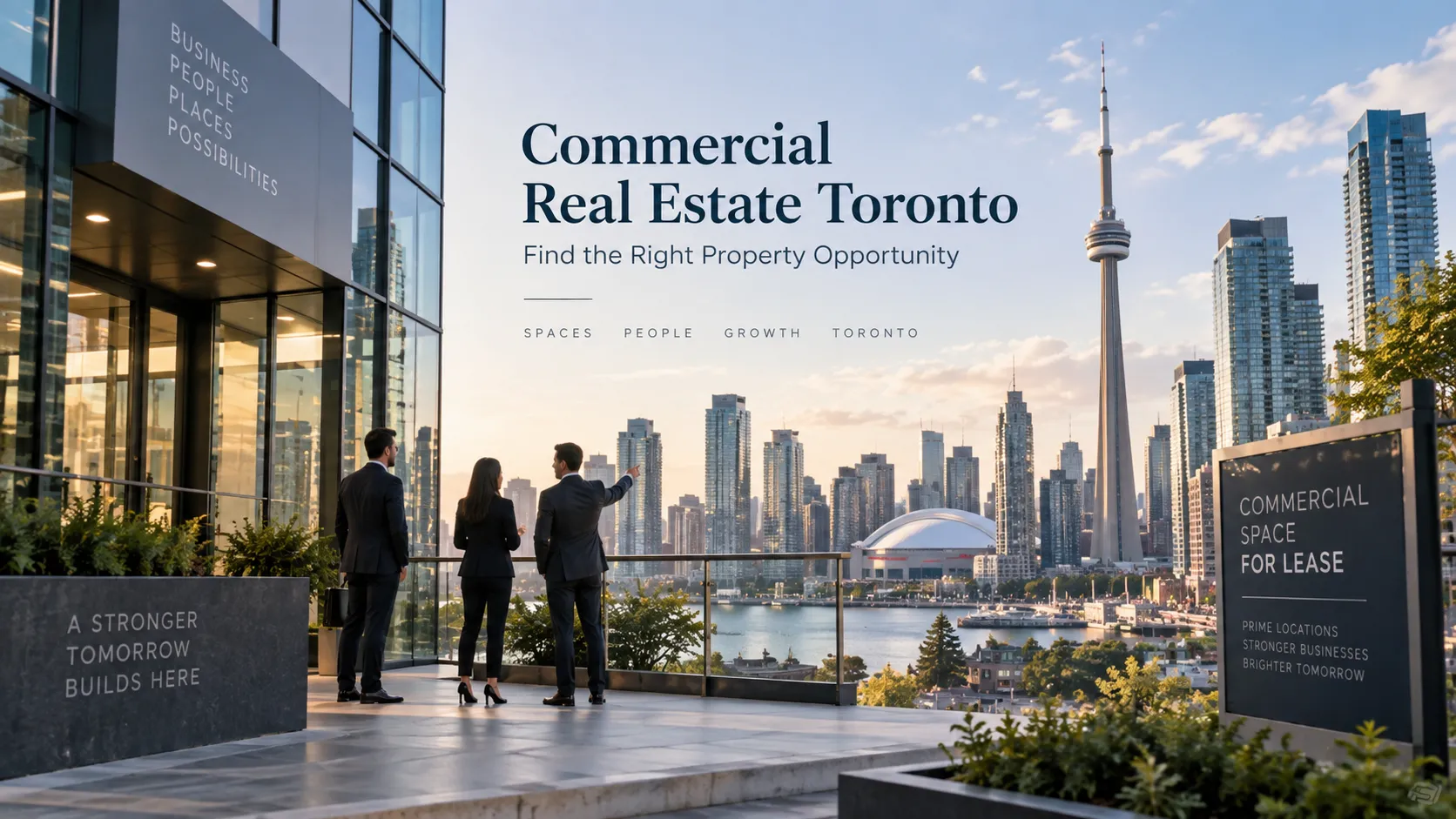
Commercial Real Estate Toronto: Find the Right Property Opportunity
Toronto’s commercial market covers everything from a single retail unit on a neighbourhood strip to multi-tenant industrial buildings in the outer GTA, and each of those categories moves differently. A business owner looking for a first storefront and an investor evaluating an income property are asking very different questions, even when they’re both searching “commercial real estate Toronto.” Farah Khan, a licensed real estate broker with Pontis Realty Inc., Brokerage, works with business owners, entrepreneurs and investors across Toronto and the GTA to identify commercial opportunities that actually fit their goals and budget.
Large institutional brokerages dominate the biggest downtown office towers and portfolio deals. For a business owner opening a second location or an investor buying their first income property, that scale of service isn’t always the right fit. Farah Khan offers a more direct, personalized alternative: hands-on guidance through the search, evaluation and negotiation process, without getting lost in a large team structure.
Commercial Real Estate Services in Toronto
- Commercial property search: Identifying retail, office, industrial or mixed-use properties that match a buyer's use case, budget and location requirements.
- Investment guidance:Helping investors think through location, tenant mix, rental potential and long-term value rather than just the asking price.
- Market analysis: Reviewing comparable properties and current conditions in the relevant submarket before a client commits to an offer.
- Property evaluation: Looking past the listing description at condition, zoning, permitted use and anything that could affect how a space can actually be used.
- Negotiation support: Working through price, terms and conditions on behalf of the buyer or investor through to a signed agreement.


Helping Businesses Find the Right Commercial Property
- Retail locations: Storefronts and shop space suited to foot traffic, visibility and the specific customer base a business is targeting.
- Office spaces:Space sized and located appropriately for a growing team, client-facing needs, or a relocation.
- Industrial properties: Warehouse and manufacturing space evaluated for access, ceiling height, loading capacity and zoning fit.
- Mixed-use developments: Properties combining retail, office or residential components, increasingly common in Toronto's newer developments.
- Investment properties: Multi-tenant or income-generating assets assessed on rental potential and long-term value rather than personal use.
Why Work With a Toronto Commercial Real Estate Specialist?
Local market understanding
Toronto's commercial submarkets, from the Financial District to industrial corridors in the outer GTA, each have distinct pricing and demand patterns.
Better property matching
A clear understanding of a buyer's actual use case narrows a broad market down to properties worth seriously considering.
Access to opportunities
Ongoing activity in the local market means earlier awareness of new and upcoming listings.
Negotiation expertise
Commercial transactions often involve more complex terms than residential ones, including lease assumptions, zoning conditions and due diligence
Time savings
A focused search process means fewer unsuitable properties and less time spent evaluating options that were never a fit.
Types of Commercial Properties in Toronto
Office Properties Downtown offices and corporate space for businesses that need a professional, client-facing location or room for a growing team.
Retail Properties Shops, restaurants and franchise locations, where foot traffic, visibility and neighbourhood fit matter as much as square footage.
Industrial Properties Warehouses and manufacturing space, typically evaluated on access to transportation routes, ceiling height, loading capability and zoning.
Investment Properties Multi-unit commercial assets purchased primarily for rental income and long-term value rather than owner-occupied use.

Why Work With a Toronto Commercial Real Estate Specialist?
Toronto remains one of Canada’s most active commercial real estate markets, with ongoing investment activity across office, industrial, retail and mixed-use assets. Conditions vary by sector. Industrial space has stayed in consistently strong demand due to logistics and distribution needs, office demand has been gradually recovering as more companies return to in-person work, and well-located retail continues to see steady interest despite more limited availability in high-demand corridors.
Location remains the strongest driver of long-term value in commercial real estate, often more so than in residential property, since foot traffic, access and zoning permissions directly affect what a tenant or business can do with the space. Rental potential, tenant quality, and lease terms all factor into an accurate assessment of a property’s investment value, and thorough due diligence, covering zoning, existing leases, building condition and any outstanding liens, remains essential before any offer is finalized. Farah Khan works through these factors with each investor rather than presenting property listings on their own.

Toronto Commercial Real Estate Process
- Understand requirements: Clarify the use case, whether owner-occupied space or a pure investment, along with budget and timeline.
- Define budget: Account for purchase price, financing, closing costs and any renovation or fit-out needs specific to commercial property.
- Research opportunities: Identify properties matching the defined criteria across relevant Toronto and GTA submarkets.
- Evaluate properties: Review zoning, condition, lease status (if tenanted) and comparable market data for each serious option.
- Negotiate terms: Work through price, conditions and any due diligence period before finalizing an offer.
- Complete transaction: Coordinate with legal counsel and any relevant advisors through to closing.
Areas We Serve
Downtown Toronto
condos and walkable access to work, transit and amenities
Midtown Toronto
a mix of condos and family homes near subway lines
North York
larger lot sizes, family-oriented neighbourhoods, strong school catchments
Scarborough
relatively more affordable detached and semi-detached housing
Etobicoke
a range of price points from condos to detached homes, with lake and park access
East York
established residential streets close to the Danforth and downtown core
The Beaches
boardwalk lifestyle with detached and semi-detached homes
Leslieville
walkable, restaurant-dense east-end neighbourhood popular with younger buyers
High Park
green space access paired with a mix of housing types
The Annex
older homes near the University of Toronto with strong character housing stock
Rosedale
established, higher-end detached homes
Liberty Village
condo-focused, popular with buyers wanting a downtown-adjacent lifestyle
Commercial Real Estate FAQs
Commercial real estate refers to property used for business purposes rather than as a private residence, including retail space, office buildings, industrial facilities and mixed-use developments. It also includes investment properties purchased primarily for rental income.
A commercial realtor helps identify suitable properties based on use case and budget, evaluates zoning and property condition, provides market context for pricing, and negotiates terms on behalf of the buyer or investor through to closing.
Toronto's commercial market includes office space, retail units, industrial and warehouse properties, mixed-use developments, and multi-tenant investment properties, each with different pricing, zoning and evaluation considerations.
It can be, depending on location, tenant demand, lease terms and the buyer's own risk tolerance and timeline. Commercial property generally carries different risk and return characteristics than residential real estate, and thorough due diligence matters more given the typically larger transaction size.
Starting points typically include defining a budget and investment goals, deciding which property type fits those goals, and working with a commercial real estate professional to identify and evaluate suitable opportunities before making an offer.
A commercial real estate purchase in Toronto typically takes 60 to 120 days, depending on financing, due diligence, property inspections, zoning, and the complexity of the transaction.
Yes, newcomers may be able to purchase commercial property in Toronto, depending on their immigration status, financing eligibility, and applicable Canadian regulations.
Condos can offer potential investment opportunities in Toronto, depending on the location, purchase price, rental demand, condo fees, and overall market conditions.
Explore our communities and areas and find the right property
🔇
🔇
🔇
🔇
❮
❯
🔇
Capitol Hill
🔇
Denver
🔇
Cherry Creek
🔇
Central Park
×